
In modern industrial construction, safety, durability, and structural strength are critical factors when designing walkways, platforms, and stair systems. One of the most reliable materials used for these applications is expanded metal, a strong and lightweight mesh created by cutting and stretching steel plates.
Expanded metal is widely used in heavy industrial environments such as factories, oil platforms, power plants, and warehouses. Because of its excellent strength-to-weight ratio and anti-slip characteristics, it has become a preferred material for industrial walkways and heavy-duty stair treads.
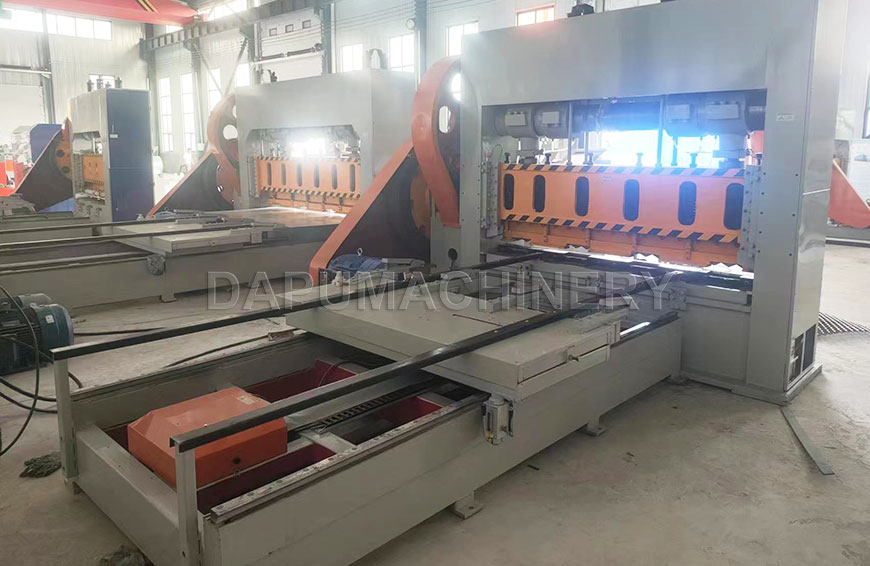
Recently, an industrial customer from Ecuador invested in two 160-ton expanded metal machines manufactured by DAPU. These machines were customized to produce heavy-duty expanded metal used in industrial stepping platforms and structural walkways.
This project represents an important step for the Ecuadorian customer, who is expanding their production line into a new industrial metal mesh segment.
Growing Demand for Industrial Walkway Expanded Metal
Industrial facilities require durable and safe flooring systems that can withstand heavy loads and harsh working environments. In sectors such as manufacturing plants, chemical factories, and logistics warehouses, industrial walkways and stair platforms are essential infrastructure components.
Expanded metal offers several advantages compared with traditional steel grating:
- High structural strength
- Excellent anti-slip surface
- Strong load-bearing capacity
- Good ventilation and drainage
- Lower material waste during production
Because expanded metal is produced directly from steel plates without welding or additional joints, it maintains a continuous metal structure, making it extremely strong and reliable.
In recent years, many industrial construction companies in Latin America have begun to adopt expanded metal for heavy-duty walkways, stair treads, and maintenance platforms.
This growing demand has created significant opportunities for local metal mesh manufacturers.
Background of the Ecuadorian Customer
The customer in this project is an established industrial metal mesh manufacturer in Ecuador. Their company mainly supplies steel mesh products to the construction and industrial infrastructure sectors.
Their existing products include:
- Construction reinforcement mesh
- Architectural metal mesh panels
- Industrial protective fencing
- Custom metal fabrication components
With the rapid growth of infrastructure and industrial projects in Ecuador, the company identified a new market opportunity in heavy-duty expanded metal for industrial walkways and stair platforms.
Entering the Industrial Platform Mesh Market
Industrial walkways and stair treads require high-strength expanded metal, usually produced from thick steel plates using high-tonnage machines.
Compared with decorative or lightweight expanded metal, heavy-duty expanded metal requires:
- Larger punching force
- Stronger machine frame
- High precision die systems
- Stable feeding mechanisms
To meet these requirements, the Ecuadorian customer decided to invest in two 160T expanded metal machines capable of producing thick and strong expanded metal sheets for industrial applications.
Why the Customer Chose DAPU Expanded Metal Machines
When selecting machinery suppliers, the Ecuadorian customer carefully compared several manufacturers from different regions.
After evaluating multiple factors, they ultimately selected machines from DAPU.
The decision was based on three key considerations.
Superior Machine Configuration
The DAPU 160T expanded metal machine features an optimized mechanical structure designed for high-strength metal processing.
Key structural advantages include:
- Reinforced heavy-duty machine frame
- High-precision expansion dies
- Stable hydraulic or mechanical punching system
- Accurate servo feeding control
These features allow the machine to produce consistent expanded metal patterns with high structural strength.
For industrial walkway applications, maintaining uniform mesh openings and consistent material thickness is extremely important.
Reliable Product Quality
The Ecuadorian customer placed great emphasis on finished mesh quality, especially because the expanded metal would be used in load-bearing industrial structures.
DAPU machines ensure high product quality through:
- Precision die technology
- Stable plate feeding system
- Accurate expansion control
- Strong machine rigidity
As a result, the produced expanded metal sheets meet strict industrial safety standards.
Competitive Price Advantage
Another important factor influencing the customer’s decision was the overall cost-performance ratio.
Compared with similar machines from other suppliers, DAPU equipment provided:
- Higher configuration levels
- Better manufacturing quality
- Competitive pricing
This combination made DAPU machines an ideal solution for the customer’s new production line investment.
Overview of the 160T Expanded Metal Machine
The 160-ton expanded metal machine is designed specifically for processing medium-to-thick steel plates into expanded metal sheets.
This type of machine is widely used for producing expanded metal used in:
- Industrial walkways
- Heavy-duty stair treads
- Steel platforms
- Structural flooring panels
- Safety grating systems
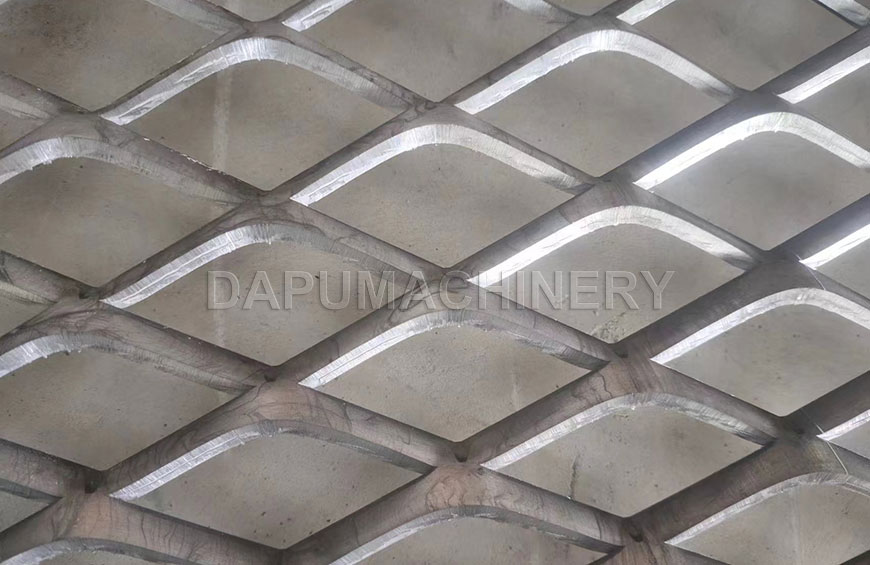
The machine operates by simultaneously cutting and stretching steel plates, forming diamond-shaped mesh patterns.
Unlike welded mesh products, expanded metal maintains a continuous metal structure, which significantly improves mechanical strength.
Typical Technical Specifications
Below are typical specifications for a heavy-duty expanded metal production system.
| Parameter | Specification |
|---|---|
| Machine Type | Heavy Duty Expanded Metal Machine |
| Press Capacity | 160 Ton |
| Material Type | Mild Steel Plate / Stainless Steel |
| Plate Thickness | 2 – 6 mm |
| Mesh Type | Diamond Expanded Metal |
| Application | Industrial Walkways and Stair Treads |
These specifications can also be customized according to customer requirements and product design standards.
Production Process of Industrial Expanded Metal
The production of heavy-duty expanded metal involves several key steps.
Steel Plate Preparation
The raw material is typically carbon steel plate or stainless steel sheet. Plates are prepared and positioned on the feeding platform.
Plate Feeding
A precision feeding mechanism moves the steel plate into the punching zone.
The feeding system ensures:
- Accurate positioning
- Stable movement
- Consistent mesh spacing
- Expansion and Cutting
The core process occurs when the machine’s expansion dies cut and stretch the steel plate simultaneously, creating diamond-shaped openings.
This process forms expanded metal without removing material waste.
Finished Sheet Output
After expansion, the finished metal sheets are collected for further processing such as:
- Flattening
- Cutting
- Surface treatment
These sheets are then used for industrial walkway panels and stair tread manufacturing.
Applications of Heavy-Duty Expanded Metal
Heavy-duty expanded metal has a wide range of industrial applications due to its strength and durability.
Industrial Walkways
Expanded metal panels provide safe walking surfaces for factory workers and maintenance personnel.
Heavy-Duty Stair Treads
Stair treads made from expanded metal offer excellent anti-slip performance, even in wet or oily environments.
Industrial Platforms
Maintenance platforms in factories and processing plants require strong and durable flooring materials.
Equipment Access Systems
Expanded metal is often used in service platforms around large industrial machines.
Advantages of Expanded Metal for Industrial Platforms
Compared with traditional flooring materials, expanded metal provides several advantages.
High Load-Bearing Capacity
The continuous metal structure provides excellent mechanical strength.
Anti-Slip Performance
The raised diamond pattern increases friction and improves safety.
Good Drainage and Ventilation
The open mesh design allows liquids and debris to pass through easily.
Material Efficiency
Expanded metal production uses the original steel plate without significant material waste.
Future Market Opportunities
Industrial construction projects in Latin America are continuing to grow, especially in sectors such as:
- Manufacturing
- Energy production
- Infrastructure development
- Logistics facilities
As these industries expand, demand for industrial walkway platforms and heavy-duty stair systems will also increase.
For metal mesh manufacturers, investing in high-capacity expanded metal machines allows them to enter a high-value industrial materials market.
FAQ About Heavy-Duty Expanded Metal Machines
1 What is a heavy-duty expanded metal machine?
A heavy-duty expanded metal machine is industrial equipment designed to cut and stretch steel plates into expanded metal mesh used for structural and load-bearing applications.
2 What materials can be used in expanded metal production?
Common materials include:
- Mild steel plates
- Stainless steel plates
- Aluminum sheets
3 What industries use heavy expanded metal?
Expanded metal is widely used in:
- Industrial platforms
- Construction projects
- Safety flooring systems
- Machinery protection
4 What is the difference between light and heavy expanded metal?
Light expanded metal is used for decorative or architectural applications, while heavy expanded metal is designed for structural and load-bearing uses.
5 What plate thickness can a 160T expanded metal machine process?
A 160-ton machine can typically process steel plates between 2 mm and 6 mm, depending on mesh design and material type.
6 Why is expanded metal suitable for industrial walkways?
Expanded metal provides strong load-bearing capacity, anti-slip surfaces, and good ventilation, making it ideal for industrial flooring.
7 Can the mesh pattern be customized?
Yes. Mesh opening size and diamond pattern can be customized through different expansion dies.
8 How long does an expanded metal machine typically last?
With proper maintenance, a high-quality expanded metal machine can operate for more than 10–15 years.
Conclusion
This project demonstrates how an industrial metal mesh manufacturer in Ecuador successfully expanded its business by investing in two 160-ton expanded metal machines from DAPU.
With reliable machine performance, strong product quality, and competitive pricing, DAPU equipment became the customer’s first choice.
The new production line now enables the customer to manufacture high-strength expanded metal for industrial walkways, stair treads, and heavy-duty platforms, opening new opportunities in the growing industrial construction market.
Post time: Mar-12-2026