
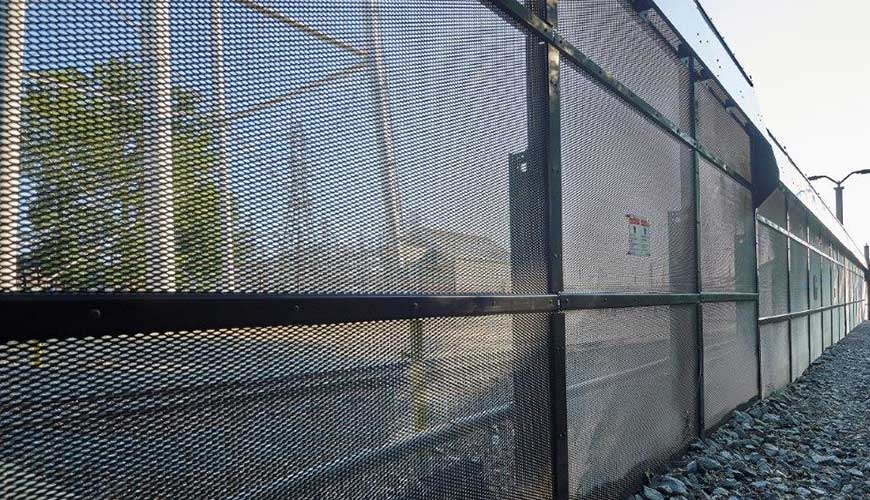
Expanded metal fencing has become a preferred solution in modern perimeter protection systems. Unlike welded mesh or chain link fencing, expanded metal offers a continuous, one-piece structure without weld joints, providing enhanced strength, anti-climb properties, and long-term durability.
However, selecting the correct expanded metal specification for fencing applications requires more than choosing a diamond pattern. Mesh geometry, material thickness, strand width, corrosion protection, structural framing, and production precision all determine long-term performance.
This guide outlines how to properly specify expanded metal fencing and what manufacturing capabilities are required to produce security-grade panels.
- What Is an Expanded Metal Fence?
- Key Applications of Expanded Metal Fencing Systems
- Expanded Metal Fence Specifications Explained
- How to Select the Right Expanded Metal Fence for Your Project
- Manufacturing Process of Expanded Metal Fence Panels
- Common Production Challenges in Expanded Metal Fence Manufacturing
- Recommended Expanded Metal Machine Configuration for Fence Production
- Quality Control Standards for Expanded Metal Fencing
- Why Expanded Metal Is More Cost-Effective Than Welded or Perforated Fencing
- FAQ – Expanded Metal Fence Specifications & Manufacturing
- Choosing the Right Expanded Metal Machine for Fence Production
1. Why Choose Expanded Metal for Fencing?
Expanded metal fencing offers distinct structural and security advantages:
- No welded joints (single continuous sheet structure)
- High strength-to-weight ratio
- Anti-climb geometry
- Excellent visibility and airflow
- Reduced material waste during production
- Lower wind resistance compared to solid panels
Because the mesh is formed by slitting and stretching a single sheet, structural integrity remains consistent across the panel. This is particularly important for security fencing applications where rigidity and tamper resistance are critical.
2. Define the Fence Application Type
Before determining thickness or mesh opening, the application must be clearly defined.
Expanded metal fencing is commonly used for:
- Industrial perimeter fencing
- Warehouse partitions
- Infrastructure security fencing
- Anti-climb barriers
- Equipment protection enclosures
- Public facility fencing
- Substation perimeter systems
Each application has different requirements in terms of load resistance and anti-climb performance.
3. Material Selection for Expanded Metal Fence
Material selection depends on environmental exposure and structural demand.
Mild Steel
Most common for industrial fencing.
Requires hot-dip galvanizing or powder coating for corrosion resistance.
Typical thickness range:
1.5 mm – 3.0 mm
Galvanized Steel
Provides corrosion resistance without secondary coating.
Used for outdoor perimeter fencing.
Thickness range:
1.2 mm – 2.5 mm
Stainless Steel
Used in coastal, chemical, or high-humidity environments.
Higher cost but superior longevity.
Thickness range:
1.0 mm – 2.0 mm
4. Thickness Selection
Fence panels must resist:
- Wind pressure
- Impact load
- Cutting or forced entry attempts
- Long-term vibration
Typical guidelines:
Application Recommended Thickness
Light partition fencing 1.2 – 1.5 mm
Industrial perimeter fence 2.0 – 2.5 mm
High-security fencing 2.5 – 3.0 mm
Stronger fencing does not rely solely on thickness—strand width and mesh opening also influence strength.
5. Mesh Opening (SWD / LWD) for Security Performance
Expanded metal fence geometry is defined by:
- SWD (Short Way of Diamond)
- LWD (Long Way of Diamond)
- Strand width
- Thickness
Common fencing specifications:
SWD: 10 – 30 mm
LWD: 20 – 60 mm
Strand width: 2 – 5 mm
Anti-Climb Design
Small SWD (below 15 mm) reduces footholds and improves anti-climb performance.
Medium Opening (20 × 40 mm)
Balanced visibility and security; widely used in industrial fencing.
Larger Opening
More economical but less secure for high-risk areas.
Open area percentage typically ranges from 40% to 60%.
6. Raised vs. Flattened for Fence Panels
For fencing applications:
- Raised expanded metal increases rigidity and impact resistance.
- Flattened expanded metal offers smoother appearance and easier framing.
Industrial perimeter fencing often uses raised mesh for higher stiffness.
7. Corrosion Protection Systems
Outdoor fences require durable surface protection.
Common methods:
Hot-Dip Galvanizing
Long-term corrosion resistance; suitable for harsh climates.
Powder Coating
Provides aesthetic color options; typically applied over galvanized surface.
Electro-Galvanizing
Used for indoor or light-duty applications.
Coating thickness and surface preparation must comply with industry standards.
8. Panel Size & Structural Framing
Typical fence panel dimensions:
Width: 1000 – 2500 mm
Height: 1500 – 3000 mm
Large panels require:
- Strong frame welding
- Reinforcement bars
- Proper fixing points
Expanded metal panels are often framed with square tubing or angle steel to enhance rigidity.
9. Load and Impact Considerations
Fence panels must withstand:
- Wind pressure
- Mechanical vibration
- Human force
- Possible impact
The continuous structure of expanded metal provides improved load distribution compared to welded mesh, which may fail at joint points.
For high-security environments, mesh opening and strand width must prevent cutting or forced entry.
10. Manufacturing Requirements for Fence-Grade Expanded Metal
Producing high-quality expanded metal fencing requires:
- Precise expansion ratio control
- Stable strand width
- Clean slit edges
- Accurate feeding system
- Strong machine frame to reduce vibration
Inconsistent manufacturing leads to:
- Uneven diamond shapes
- Variable strand width
- Weak structural zones
- Installation misalignment
Professional-grade production equipment ensures reliable fencing performance.
11. Fence Panel Production Flow
A complete expanded metal fence production line typically includes:
- Decoiling or sheet feeding system
- Expanded metal machine
- Leveling or flattening unit (optional)
- Cut-to-length system
- Panel framing welding system
- Surface treatment line
- Stacking and packing system
Manufacturers targeting security and infrastructure markets must maintain consistent mesh geometry across high production volumes.
12. Equipment Considerations for Manufacturers
Standard industrial expanded metal machines may not provide the precision required for security fencing.
Manufacturers should evaluate:
- Servo-controlled feeding
- Adjustable die system
- Heavy-duty machine structure
- Capability for 1.2 – 3.0 mm material
- Large-width processing
- Stable long-term operation
DAPU expanded metal machines are engineered for heavy-duty and security-grade production. Their systems offer stable expansion geometry, precise feeding control, and compatibility with both raised and flattened mesh production.
For manufacturers planning to establish a fencing production facility, selecting high-rigidity equipment ensures long-term product consistency and market competitiveness.
13. Cost Efficiency vs. Security Performance
Reducing material thickness to lower cost may compromise:
- Anti-climb performance
- Impact resistance
- Structural rigidity
Fence failure not only increases maintenance cost but also damages contractor credibility.
Proper specification protects both project integrity and manufacturer reputation.
14. Frequently Asked Questions (FAQ)
1. What thickness is best for expanded metal fencing?
For industrial perimeter fencing, 2.0 – 2.5 mm is commonly used. High-security fencing may require 2.5 – 3.0 mm material.
2. What mesh size prevents climbing?
SWD below 15 mm significantly reduces foothold opportunities and improves anti-climb performance.
3. Is raised or flattened expanded metal better for fences?
Raised mesh offers greater rigidity and impact resistance, making it suitable for security fencing. Flattened mesh is preferred when appearance is prioritized.
4. What corrosion protection is recommended?
Hot-dip galvanizing followed by powder coating provides maximum durability in outdoor environments.
5. Can expanded metal fencing replace welded mesh fencing?
Yes. Expanded metal offers improved structural continuity and anti-climb properties compared to welded mesh.
6. What machinery is required to manufacture expanded metal fence panels?
Manufacturers require a precision expanded metal machine with stable feeding control, adjustable die configuration, and heavy-duty structural design. Industrial-grade systems such as those provided by DAPU are suitable for producing security-grade fencing panels with consistent quality.
15. Conclusion
Expanded metal fencing combines structural strength, anti-climb performance, and efficient material usage. Proper specification requires evaluation of material grade, thickness, mesh geometry, structural framing, and corrosion protection.
From a manufacturing perspective, fence-grade expanded metal demands consistent expansion accuracy and stable strand formation. Equipment selection plays a decisive role in product quality and long-term performance.
For manufacturers seeking to supply industrial, infrastructure, or high-security fencing markets, investing in professional-grade expanding equipment ensures production reliability and competitive advantage.
Expanded metal fencing is not simply a barrier—it is an engineered security solution. Proper specification and precise manufacturing define its effectiveness.
Post time: Mar-04-2026