
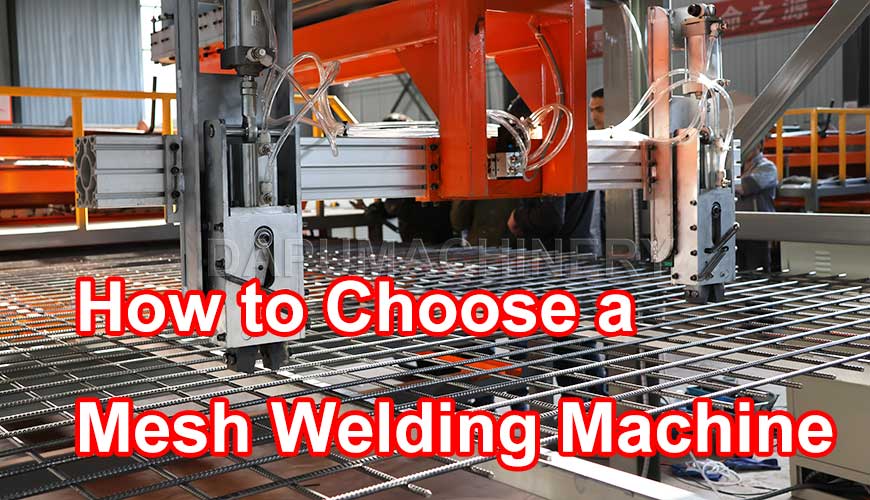
In modern metal fabrication and construction industries, mesh welding machines play a critical role in producing various types of welded wire mesh used in infrastructure, construction reinforcement, fencing, cages, and industrial products. As demand for welded mesh continues to grow globally, manufacturers and investors often face the same question when planning a new production line:
How do you choose the right mesh welding machine?
From an engineering perspective, selecting the correct machine is not simply about price. It requires evaluating several technical factors including wire diameter range, mesh specifications, production capacity, welding technology, automation level, and future product flexibility.
This article explains the key factors engineers consider when selecting a mesh welding machine and provides guidance for manufacturers planning to invest in welded mesh production equipment.
Understanding What a Mesh Welding Machine Does
A mesh welding machine is an automated piece of equipment used to weld longitudinal wires and cross wires together to form a welded mesh grid. The machine typically operates using resistance welding technology, where electrical current and pressure are applied at each intersection of wires to create a strong welded joint.
Modern mesh welding machines can produce many types of mesh products, including:
- Reinforcing steel mesh for concrete structures
- Welded wire mesh panels
- Construction reinforcement mesh
- Fence panels
- animal cage mesh
- industrial wire mesh products
The machine feeds wires automatically, positions them accurately, and welds each intersection at high speed. Depending on the machine design, production speeds can reach 40–120 welds per minute, making automated mesh welding far more efficient than manual fabrication.
Because welded mesh products vary widely in wire diameter, mesh spacing, and application requirements, choosing the correct machine configuration is essential for long-term production efficiency.
Determine the Wire Diameter Range
One of the most important factors when selecting a mesh welding machine is the wire diameter range it can handle.
Different industries require different wire thicknesses, and welding parameters must be designed specifically for those ranges.
Typical production categories include:
Heavy-Duty Reinforcement Mesh (5–12 mm)
This range is used for steel reinforcement mesh and welded rebar mesh applied in construction projects such as:
- concrete slabs
- highway pavements
- bridge decks
- industrial floors
Machines designed for 5–12 mm reinforcing bars require high welding power, strong mechanical frames, and precise control systems.
These machines are commonly referred to as rebar mesh welding machines.
Medium Wire Mesh Production (3–8 mm)
Many mesh factories produce welded mesh panels used in construction reinforcement, fencing, and infrastructure projects.
The 3–8 mm range offers flexibility for multiple products such as:
- construction mesh
- fence panels
- building reinforcement mesh
Machines designed for this range balance welding power with production speed and versatility.
Light Wire Mesh Production (3–6 mm)
Light wire mesh is widely used in applications such as:
- poultry cages
- small welded panels
- light fencing products
- wire storage baskets
Machines in the 3–6 mm range focus more on speed and efficiency rather than heavy-duty welding force.
Consider the Types of Mesh Products You Plan to Produce
Before purchasing equipment, engineers must evaluate the range of products the factory plans to manufacture. Different mesh products require different machine structures and automation systems.
Some common welded mesh products include:
Reinforcement Mesh
Used in concrete construction and infrastructure projects. Requires machines capable of welding ribbed reinforcing bars with high welding pressure and stable current output.
Fence Panels
Fence production may include:
- security fence mesh
- 3D curved fence panels
- anti-climb fence panels
These products often require machines capable of handling thinner wires with high production speed.
Poultry and Animal Cage Mesh
Poultry cage manufacturers require machines capable of producing uniform small mesh sizes with stable welding quality.
Cable Tray Mesh
Cable trays used in electrical installations require precision mesh panels with consistent spacing and clean weld joints.
Machines used for cable tray production typically require accurate wire positioning and consistent weld strength.
Brick Reinforcement Mesh
Brick reinforcement mesh (also called brick force mesh) is used in masonry construction to improve wall strength and crack resistance.
These machines are designed for narrow mesh widths and continuous production.
Evaluate Production Capacity Requirements
Another key factor in selecting a mesh welding machine is the expected production capacity.
Production capacity depends on several parameters:
- number of welding electrodes
- welding speed
- wire feeding system
- mesh panel size
- automation level
High-capacity automatic machines can produce several tons of welded mesh per day, making them suitable for large industrial manufacturers supplying infrastructure and construction projects.
Smaller factories may prefer semi-automatic systems that require less investment while still offering good productivity.
Planning production capacity correctly ensures the equipment can meet market demand without creating bottlenecks in the factory.
Check the Welding Technology and Power System
Welding quality is the most critical factor in welded mesh production. Poor weld strength can cause mesh panels to fail structural tests or break during transportation.
Key elements of welding technology include:
- welding transformer capacity
- welding current control
- electrode pressure system
- cooling system stability
High-quality mesh welding machines use synchronous welding control systems to ensure uniform weld strength across the entire mesh panel.
Engineers should also check the stability of the welding transformer and the machine’s ability to maintain consistent welding performance during continuous operation.
Automation and Control Systems
Modern mesh welding machines increasingly rely on automation systems and PLC control technology to improve production efficiency.
Important automation features may include:
- automatic cross-wire feeding
- automatic mesh cutting
- mesh stacking systems
- touch-screen operation interface
- adjustable mesh size parameters
Automated machines reduce labor requirements and ensure consistent product quality.
Factories planning long-term production expansion should strongly consider fully automatic mesh welding lines.
Machine Durability and Structural Design
Because welding machines operate under high electrical load and mechanical stress, the machine frame and mechanical structure must be strong and stable.
Important structural features include:
- heavy-duty steel frame
- precision wire feeding system
- durable welding electrodes
- reliable pneumatic components
A well-designed machine will maintain accuracy and welding quality even during continuous high-speed production.
Choose a Manufacturer with Multiple Machine Options
One mistake many factories make is purchasing a machine that can produce only a single type of mesh product. In practice, markets change, and manufacturers often need to diversify their product range.
Choosing a supplier that offers multiple types of mesh welding machines allows factories to expand production capabilities as their business grows.
DAPU Mesh Welding Machines for Different Mesh Production Needs
For manufacturers looking to invest in reliable welded mesh production equipment, DAPU provides a wide range of professional mesh welding machines designed for different industries and wire diameter requirements.
DAPU manufactures several types of mesh welding equipment, including:
5–12 mm Rebar Mesh Welding Machine
Designed for producing steel reinforcement mesh and welded rebar mesh used in construction projects such as highways, bridges, concrete slabs, and infrastructure development.
These machines feature high welding power and strong mechanical frames to handle ribbed reinforcement bars.
Suitable for manufacturing various welded mesh products including construction mesh, fence panels, and industrial wire mesh.
This range provides flexibility for manufacturers serving multiple markets.
3–6 mm Light Wire Mesh Welding Machine
Optimized for high-speed production of light welded mesh products such as small panels and cages.
Poultry Cage Mesh Welding Machine
Designed specifically for poultry farming equipment manufacturers producing chicken cage mesh and other livestock cage structures.
Cable Tray Mesh Welding Machine
Used for producing mesh panels used in cable tray systems for electrical installations.
These machines provide precise welding and consistent mesh spacing.
3D Fence Panel Welding Machine
Specialized equipment for manufacturing 3D curved security fence panels, widely used for perimeter protection and infrastructure fencing.
Anti-Climb Fence Mesh Welding Machine
Designed for producing high-security anti-climb fence mesh, commonly used for prisons, airports, and industrial security fencing.
Used for manufacturing brick reinforcement mesh used in masonry wall reinforcement systems.
Final Thoughts
Choosing the right mesh welding machine requires careful evaluation of production goals, wire diameter requirements, mesh product types, and factory capacity.
From an engineering perspective, the best equipment investment is one that offers:
- reliable welding quality
- stable mechanical structure
- efficient automation systems
- flexibility for multiple mesh products
As welded mesh continues to be widely used in construction, infrastructure, fencing, and industrial manufacturing, investing in high-quality welding equipment ensures long-term production efficiency and product quality.
Manufacturers planning to enter or expand in the welded mesh industry can benefit from working with experienced equipment suppliers that provide multiple machine options and proven welding technology.
With a broad portfolio of mesh welding machines designed for different wire ranges and applications, DAPU mesh welding equipment offers practical solutions for manufacturers producing reinforcing mesh, fence panels, cage mesh, cable tray mesh, and many other welded wire products.
Post time: Mar-09-2026