
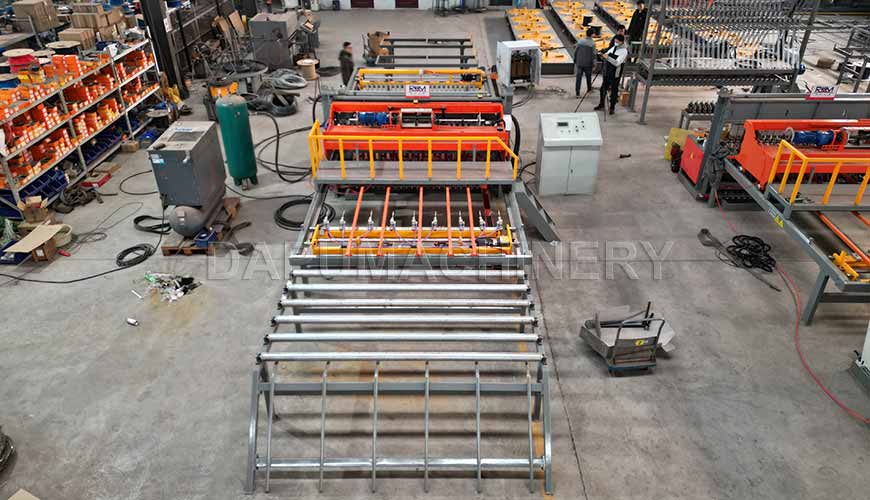
Buying a wire mesh welding machine is a significant investment, and choosing the wrong one can lead to wasted time and money in production. Our goal isn’t to find the cheapest, but the machine best suited to your business.
This guide will help you make a smart and cost-effective decision by considering four key factors before purchasing.
1. What kind of wire mesh will you be welding? (Size and wire diameter)
The type of wire mesh you need to produce directly determines the type of machine you require. A light-duty machine cannot weld thick rebar, while a heavy-duty machine is wasteful for welding thin wire.
1.1. Wire thickness (rebar diameter) is crucial.
This is the most important factor. If your machine cannot handle the thickest rebar, it will result in weak welds or machine damage. Don’t underestimate future needs: If you are currently using 8mm rebar but may need 10mm in the future, you should buy a heavy-duty wire mesh welding machine that can handle 12mm rebar now. Remember, always choose a machine with a maximum load capacity 20% higher than your current needs. This will make the machine easier to operate and reduce the failure rate.
1.2. What width of wire mesh can the machine weld? What is the smallest possible mesh size (holes)?
Does your market require 2.5-meter or 3-meter wide wire mesh? This determines the machine size and the number of welding heads.
If you are producing very small meshes (e.g., 50x50mm), the machine’s feeding and welding precision requirements will be very high.
2. Technology Selection and Automation Level (Speed and Quality)
The technology you choose directly impacts your labor costs and the final welding quality of the wire mesh.
2.1. Automation Level: Fully Automatic vs. Semi-Automatic
Do you want workers to do more work, or machines?
Fully Automatic: Suitable for large-scale, uninterrupted production. Wire is fed directly from the wire coil, requiring no manual intervention. This is the best choice for reducing labor costs.
Semi-Automatic: Suitable for factories with a wide variety of products and moderate production volumes. Cross wires typically require manual placement of pre-straightened and cut rebar into the hopper.
2.2. Welding Technology: Medium Frequency DC (MFDC) vs. Traditional AC (AC)
This is crucial for welding quality.
Traditional AC (Alternating Current): Inexpensive, but the welding current is unstable, easily leading to “incomplete welds,” especially when welding thick rebar.
MFDC Inverter: This is currently the best technology available. MFDC inverter welding machines provide a stable and continuous welding current. This ensures that every weld is strong and reliable, while also saving 20%-30% on electricity. In the long run, this can save you significant amounts on electricity and maintenance costs.
3. Actual Output and Reliability (Profitability)
A machine that frequently breaks down, no matter how cheap, will not help you make money. We need to focus on the machine’s consistent and stable production capacity.
3.1. Actual Speed: Don’t Just Look at the Advertising.
Don’t just believe the “maximum speed” in the brochure. Make a request: Ask the manufacturer to provide the actual stable output for your most frequently produced mesh specifications (e.g., 6mm, 150mm x 150mm mesh). Stable production efficiency is more important than occasional peak speeds.
High-Speed Manufacturers: Truly reliable high-speed welding machine manufacturers ensure that cutting, wire feeding, and welding are perfectly synchronized at high speeds, without any slowing down of each other.
3.2. Machine Durability and Maintenance: Does the machine use good parts?
Check the Brand: Inspect whether the machine’s key components (pneumatic, electrical) use internationally renowned brands (such as Siemens, Schneider Electric). Good parts mean fewer breakdowns.
Cooling System: Ensure the machine has a good water cooling system. If the welding transformer and electrodes do not dissipate heat well, they are easily burned out, leading to downtime.
4. Supplier Cooperation and After-Sales Support
Purchasing the machine is just the beginning; finding a good partner is the long-term guarantee.
4.1. Manufacturer Reputation and Case Studies
Reputation: Look for manufacturers with a good reputation and successful customer case studies. Ideally, you should see examples of them solving similar problems for you.
Spare Parts: Inquire about the inventory and delivery speed of consumable parts (such as electrodes and cutting tools). Machine downtime results in production losses far exceeding the cost of spare parts.
4.2. Installation and Training
On-site Service: Confirm whether the manufacturer provides on-site installation, commissioning, and operation training by engineers. Even the best machines will not function properly if installed and operated incorrectly.
Remote Support: When the machine malfunctions, can the manufacturer provide remote diagnosis and guidance via the internet? This can save a significant amount of waiting time and travel expenses.
In summary: Making a wise investment.
Choosing a wire mesh welding machine is not simply about comparing prices, but about calculating long-term return on investment (ROI). A highly automated machine using MFDC technology may have a slightly higher initial cost, but because it is more energy-efficient, requires fewer workers, and has a lower failure rate, it will bring you greater profits and stronger competitiveness in the coming years.
Post time: Dec-12-2025