
Why Expanded Metal Is Used in Modern Facade Design: The Evolution of the Building Envelope
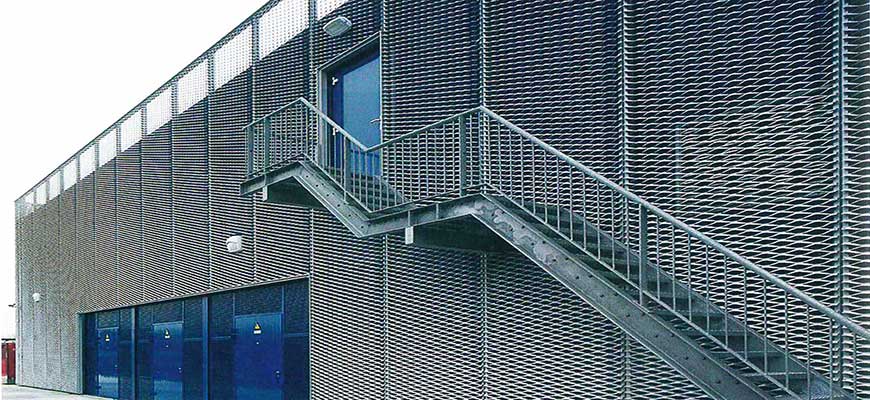
In the last decade, the global skyline has undergone a dramatic transformation. Traditional glass and concrete are increasingly being wrapped in a “second skin” of intricate, shimmering metal. As a manufacturer at the heart of this industry, operating DAPU Expanded Metal Machines, we have watched this material evolve from an industrial walkway grating into the crown jewel of modern facade design. But why has this specific material captured the imagination of world-class architects?
The answer lies in the intersection of physics and aesthetics. A facade must do more than just look good; it must manage thermal loads, provide security, and withstand the elements for decades. Expanded metal offers a unique structural geometry that perforated or woven materials simply cannot replicate. In this guide, we explore the technical reasons behind its dominance and how the precision of the manufacturing machine dictates the success of the building’s exterior.
Does the 3D Geometry Offer Better Solar Shading?
One of the primary reasons architects choose expanded metal for facades is its inherent “passive cooling” properties. Unlike flat perforated sheets, expanded metal is 3D. When a coil of aluminum is processed through our DAPU high-speed machines, the strands are angled. This creates a natural “louver” effect. Depending on how you orient the panel, the mesh can block high-angle summer sun while allowing low-angle winter sun to penetrate and warm the building.
This functional shading reduces the building’s energy consumption by up to 30%, significantly lowering HVAC costs. For engineers, this isn’t just decoration—it is a performance-driven architectural tool. By adjusting the “pitch” of the blade on the DAPU machine, we can customize the shading coefficient to match the specific solar orientation of a building, a level of customization that is a game-changer for sustainable design.
Can Expanded Metal Reduce the Structural Load on High-Rises?
Weight is the enemy of high-rise construction. Every extra kilogram on the facade requires more steel and concrete in the building’s core. Expanded metal is the ultimate “lightweight champion.” Because the material is stretched rather than punched, you get a much larger panel area from a smaller amount of raw metal. A 2mm thick aluminum sheet can be expanded to cover three times its original area while retaining remarkable structural rigidity.
The “bonds” (the solid intersections where the diamonds meet) act as a continuous structural web. This allows for larger panel spans with fewer support brackets. When produced on a DAPU Expanded Metal Machine, the precision of these bonds is guaranteed. This ensures that the panels do not deform under wind pressure, providing a lightweight yet incredibly strong “armor” for the building envelope.
How Does the Material Handle High Wind Loads and Vibration?
Facades on skyscrapers are subjected to extreme wind pressures. A common pain point for contractors is “oil-canning” or the whistling sound created by air passing through metal screens. Expanded metal’s unique “slanted” strand design breaks up wind vortices more effectively than flat surfaces. It diffuses the wind, reducing the direct pressure on the building’s glass windows behind the mesh.
To achieve this safety level, the mesh must be perfectly uniform. Any inconsistency in the diamond size can create weak points that lead to vibration or “fatigue failure.” This is where the DAPU machine’s heavy-duty casting and precision servo-feeding system become critical. It produces a mesh that is so consistent that it acts as a tuned dampener against wind energy, ensuring the facade remains silent and secure even during storms.
What Role Does Visual Privacy and Transparency Play?
Modern urban living requires a balance between “seeing out” and “not being seen.” Expanded metal provides a “one-way mirror” effect. From the outside, the angled strands catch the light, creating a solid, shimmering volume that protects the privacy of the occupants. From the inside, however, the eye focuses past the thin strands, maintaining a clear view of the city.
Architects refer to this as “translucency control.” By manipulating the SWD (Short Way of Design) and LWD (Long Way of Design) on our DAPU production lines, we can create facades that range from nearly transparent to almost completely opaque. This allows for a “gradient facade” where the building looks different from every angle—a dynamic visual experience that keeps the architecture feeling alive.
Is Expanded Metal the Most Sustainable Facade Option?
Sustainability is no longer an option; it is a mandate. Expanded metal is inherently the most eco-friendly metal fabrication method. In perforated metal, up to 40% of the material is punched out and sent back to the smelter as scrap, consuming massive amounts of energy. In the expansion process used by DAPU machines, there is zero waste. One ton of raw material produces one ton of finished facade mesh.
Furthermore, because the mesh is often made of 100% recyclable aluminum or stainless steel, the facade can eventually be recycled at the end of the building’s life cycle. This “Circular Economy” approach is highly attractive to developers seeking LEED or BREEAM certifications. When you buy mesh made on a DAPU machine, you are investing in a process that respects the planet’s resources.
Can Modern Coatings Enhance the Architectural Longevity?
A facade is exposed to UV rays, acid rain, and salt spray. To ensure the mesh looks new for 25+ years, the coating must be flawless. Expanded metal provides an excellent “key” for powder coating or PVDF (Polyvinylidene Fluoride) finishes. The 3D geometry ensures that the coating wraps around every strand, providing 360-degree protection.
We often recommend PVDF coatings for facade applications because they resist “chalking” and fading. Because the DAPU Expanded Metal Machine produces a mesh with exceptionally clean edges (no micro-cracks or burrs), the coating adheres more uniformly. This prevents the “edge rust” often seen in lower-quality expanded products, ensuring the building remains a landmark rather than an eyesore.
How Do Design-Build Teams Manage the Cost of Custom Patterns?
In the past, custom facade patterns were prohibitively expensive due to tooling costs. However, modern DAPU machinery has changed the economics of the industry. Our machines allow for rapid adjustment of the “over-feed” and “stroke” parameters, meaning we can produce custom diamond shapes without needing to manufacture entirely new die sets for every minor variation.
This flexibility allows architects to experiment with “variable-density facades,” where the mesh pattern changes across the face of the building to respond to different interior functions (e.g., more open mesh for office floors, denser mesh for parking levels). This “mass customization” is only possible when the factory utilizes high-end, programmable expansion technology.
Why Is the Precision of the DAPU Machine Critical for Installation?
The biggest nightmare for a facade contractor is a “skewed” panel. If the diamonds are off-center by even 2mm, the lines will not align across the facade, creating a jagged, unprofessional look. Facade panels are often large—up to 4 meters long—so any machine error is magnified. The DAPU Expanded Metal Machine is engineered with a high-torque, synchronized feeding system that eliminates “camber” (curving) and skewing.
When our customers use DAPU machines, they produce panels that are perfectly square and flat. This significantly reduces installation time on-site, as the panels “click” into their mounting brackets without the need for force or field adjustments. In the world of high-stakes construction, this precision equals profit.
Is It Time to Upgrade to DAPU Expanded Metal Technology?
If you are a manufacturer looking to enter the lucrative architectural facade market, your old industrial-grade machines will not suffice. The facade industry demands aesthetic perfection, tight tolerances, and the ability to work with thick, high-grade aluminum. The DAPU Expanded Metal Machine represents the pinnacle of this technology. It is built to handle the rigorous demands of architectural specifications while maintaining the high speeds necessary for factory profitability.
Choosing DAPU means you are choosing a partner that understands the “science of the stretch.” From our precision-ground blades to our intuitive PLC control systems, every element of a DAPU machine is designed to produce facade-grade mesh that wins awards. Don’t just produce metal—create architectural landmarks. It’s time to elevate your production capabilities with the industry-leading DAPU standard.
Frequently Asked Questions (FAQ)
1. What is the best material for an expanded metal facade?
Aluminum (3000 or 5000 series) is the most popular choice due to its strength-to-weight ratio and corrosion resistance. However, for a more “raw” look, weathering steel (Corten) or stainless steel are also used for high-end projects.
2. Does expanded metal whistle in the wind?
If the strand width and open area are calculated correctly, no. Expanded metal actually acts as a wind diffuser. Using a DAPU machine ensures the edges are clean, which prevents the “aeolian harp” effect (whistling) caused by air catching on burrs or sharp imperfections.
3. Can expanded metal facades be used for security?
Absolutely. It is virtually impossible to cut with standard hand tools and provides a formidable barrier while still appearing aesthetically light. It is commonly used for schools, data centers, and government buildings.
4. How do I choose the “Open Area” for a facade?
This depends on your climate. For hot, sunny regions (Middle East/Australia), a 30-40% open area is better for shading. For cloudy regions (Northern Europe/Seattle), a 60-70% open area allows more natural light into the building.
5. Is it expensive to maintain an expanded metal facade?
No. Most facades are “self-cleaning” as rainwater washes dust through the mesh. With a high-quality PVDF finish, the facade only needs a professional wash every 5-10 years to maintain its original luster.
Post time: Mar-05-2026